Voyagez à l'étranger ?
Vous voyagez depuis mauritania ? Trouvez la meilleure eSIM pour votre prochaine destination
Choisissez parmi plus de 200 pays et économisez jusqu'à 90 % sur l'itinérance
Approuvé par des millions de voyageurs
Activation instantanée
Économisez jusqu'à 90% sur l'itinérance
Principaux partenaires réseau

Mauritania eSIM
-
Si vous êtes à court, vous pouvez toujours Recharger
Le forfait commence lorsque vous vous connectez à un réseau pris en charge
Données
Choisissez votre forfait
Informations essentielles pour visiter la Mauritanie
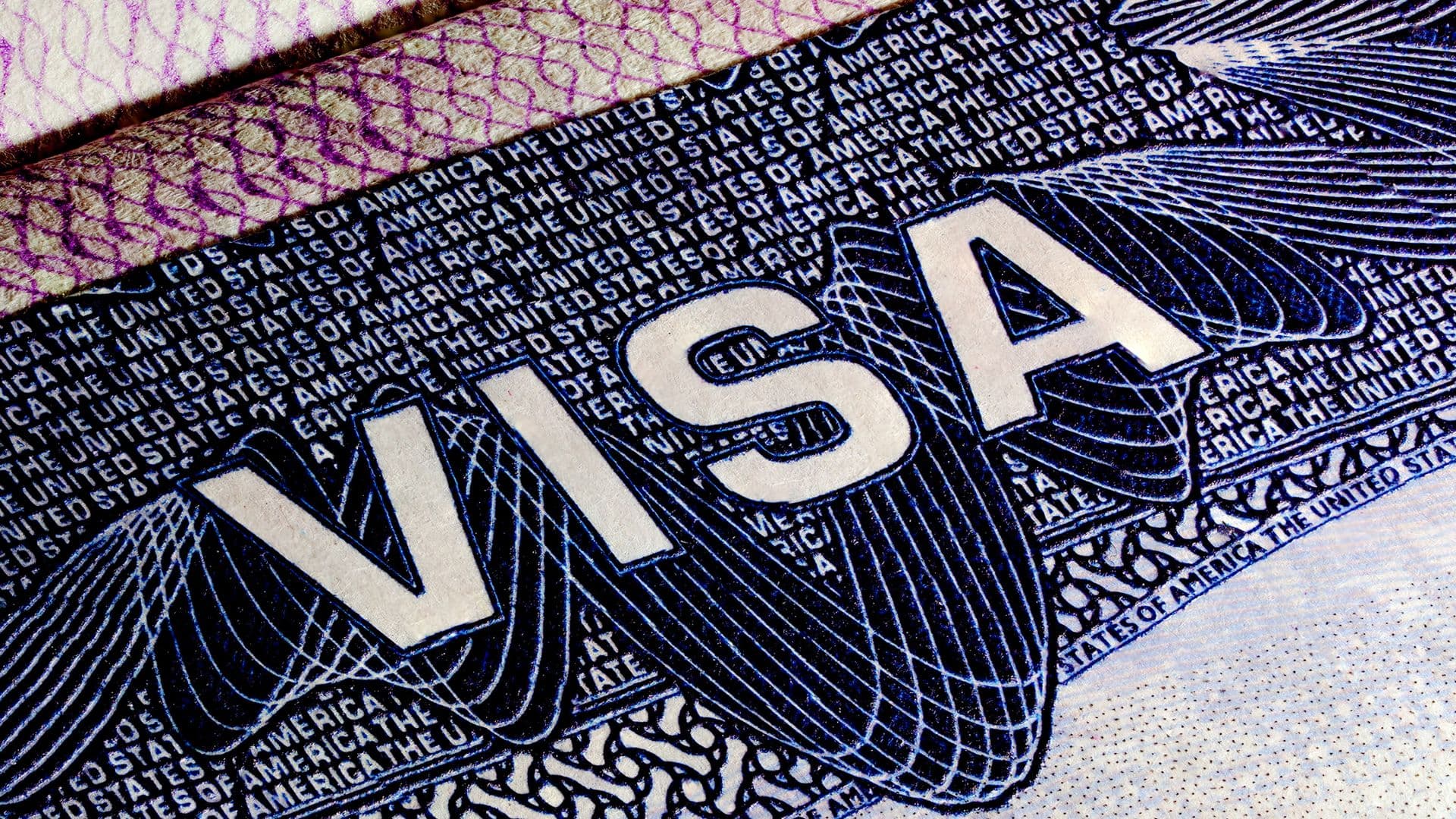
Pour nos amis indiens prévoyant un voyage en Mauritanie, un visa est généralement indispensable. Bien que certaines sources suggèrent qu'un visa à l'arrivée (VOA) pourrait être disponible à l'aéroport international de Nouakchott–Oumtounsy (NKC), s'y fier uniquement peut être un peu désinvolte et entraîner des tracas de dernière minute. Il est toujours prudent de confirmer les dernières réglementations avant de faire vos valises.
Pour garantir un voyage sans encombre, le plus sûr est de demander votre visa bien à l'avance auprès de l'ambassade de Mauritanie à New Delhi. Ainsi, vous n'aurez aucune inquiétude à votre arrivée et pourrez vous concentrer sur les paysages désertiques fascinants et la culture vibrante. Vérifiez directement auprès de l'ambassade pour connaître les exigences et la procédure de demande les plus récentes.
Source: fly2globe
Confiance: 0.9
Cycle de Mise à Jour: Quarterly
Avant même de penser à votre 'safari' mauritanien, assurez-vous que votre passeport est en parfait état. Comme pour de nombreuses destinations internationales, la Mauritanie exige généralement que votre passeport soit valide au moins six mois après votre date de départ prévue du pays. Ce n'est pas seulement une formalité ; c'est un point de contrôle crucial pour éviter tout problème à l'immigration.
N'oubliez pas de vérifier si votre passeport comporte suffisamment de pages vierges pour les tampons d'entrée et de sortie – généralement, au moins deux sont recommandées. C'est un petit détail, mais le négliger pourrait transformer votre voyage passionnant en un véritable casse-tête. Un passeport valide avec une longue durée de validité est votre ticket d'or, sans aucun doute.
Source: amazon
Confiance: 0.95
Cycle de Mise à Jour: Annually

Si votre voyage en Mauritanie n'implique qu'une courte escale à l'aéroport international de Nouakchott–Oumtounsy (NKC) avant de vous rendre à votre prochaine destination, et que vous n'avez pas l'intention de quitter la zone de transit, vous pourriez vous demander : 'Ai-je vraiment besoin d'un visa ?' Généralement, si vous restez dans la zone de transit international et avez un billet de continuation confirmé dans un court délai (par exemple, 24 heures), un visa de transit pourrait ne pas être requis. Cependant, les politiques peuvent être délicates, alors ne prenez pas cela à la légère.
Mais attention, si votre escale est longue, si vous devez réenregistrer vos bagages, ou même sortir pour prendre un 'chai' (thé) à l'extérieur de l'aéroport, alors un visa d'entrée complet sera probablement requis. Pour éviter toute confusion ou tout problème inattendu, il est toujours préférable de clarifier votre situation de transit spécifique avec la compagnie aérienne ou l'ambassade mauritanienne à l'avance. Mieux vaut prévenir que guérir, n'est-ce pas ?
Source: tpt
Confiance: 0.85
Cycle de Mise à Jour: Annually
Bonne nouvelle pour nos voyageurs indiens : actuellement, il n'y a pas d'autorisation de voyage électronique distincte (comme un ESTA ou une ETA) requise pour la Mauritanie, en plus de votre visa régulier. Votre visa valide, qu'il soit obtenu à l'avance ou potentiellement à l'arrivée, sert de votre autorisation principale pour entrer dans le pays. Donc, pas de 'tracas administratifs' supplémentaires au-delà du visa lui-même.
Assurez-vous simplement que votre demande de visa est complète et approuvée, et vous êtes prêt à partir. Gardez un œil sur les annonces officielles, car les réglementations de voyage peuvent changer sans préavis. Mais pour l'instant, une fois que votre visa est réglé, vous êtes prêt à découvrir la Mauritanie, en toute sérénité.
Source: istock
Confiance: 0.9
Cycle de Mise à Jour: Annually
À l'heure actuelle, pour les citoyens indiens, la Mauritanie ne semble pas disposer d'un portail eVisa officiel largement médiatisé ou pleinement opérationnel pour les demandes directes en ligne. Alors que certains pays proposent un processus numérique sans tracas, il semble que la Mauritanie s'appuie généralement sur les demandes traditionnelles auprès de l'ambassade ou, dans certains cas, sur une facilité de visa à l'arrivée à l'aéroport international de Nouakchott–Oumtounsy (NKC). Vous ne trouverez donc peut-être pas de lien direct 'cliquez et obtenez' pour un eVisa, cher ami.
Par conséquent, si vous cherchez à obtenir votre visa avant de prendre l'avion, votre meilleure option est de contacter l'Ambassade de Mauritanie à New Delhi pour obtenir les procédures de demande les plus précises et les plus à jour. Méfiez-vous toujours des sites Web tiers qui prétendent offrir des eVisas mauritaniens, car ils pourraient ne pas être légitimes. Tenez-vous-en aux canaux officiels pour éviter toute tromperie.
Source: trading-view
Confiance: 0.88
Cycle de Mise à Jour: Quarterly
Health & Safety Tips for mauritania
In Mauritania, the primary emergency numbers are 117 for police, 118 for fire services, and 119 for ambulance services. It is advisable to have these numbers readily accessible, perhaps saved in your phone or written down, as local assistance might be limited outside major urban centers.
Be aware that response times can vary significantly, especially in remote areas, and English-speaking operators may not always be available. For consular assistance, travelers should also keep their embassy's emergency contact information handy, as they can provide support in situations where local services are insufficient or language barriers exist.
It's prudent to confirm these numbers upon arrival, as local systems can occasionally change or have regional variations. In case of a medical emergency, contacting your travel insurance provider or embassy first can often facilitate better access to appropriate care or evacuation.
Source: U.S. Embassy in Mauritania, UK Foreign, Commonwealth & Development Office (FCDO)
Confiance: 0.95
Cycle de Mise à Jour: Annually/As needed
Travelers to Mauritania should be aware of several health risks, including malaria, which is prevalent throughout the country, especially during and after the rainy season. Prophylactic medication is highly recommended. Other common concerns include Hepatitis A and B, Typhoid, and Rabies, for which vaccinations are often advised.
Additionally, traveler's diarrhea is a frequent ailment, necessitating strict adherence to safe food and water practices, such as drinking only bottled or purified water and avoiding uncooked or unpeeled foods. It is also recommended to carry a personal first-aid kit with basic medications and any prescription drugs you may need, along with a copy of your prescriptions.
Medical facilities in Mauritania are generally limited, particularly outside the capital, Nouakchott, and may not meet international standards. For serious medical conditions or emergencies, medical evacuation to a country with advanced healthcare facilities is often necessary and can be very costly. Therefore, comprehensive travel insurance that covers medical evacuation is strongly advised for all visitors.

Source: Centers for Disease Control and Prevention (CDC), World Health Organization (WHO), UK FCDO
Confiance: 0.95
Cycle de Mise à Jour: Quarterly/As needed
For entry into Mauritania, a Yellow Fever vaccination certificate is required for all travelers aged 9 months or older arriving from countries with a risk of Yellow Fever transmission, or for those who have transited for more than 12 hours through an airport in such a country. It is crucial to check the most current list of Yellow Fever endemic countries before your trip.
Beyond mandatory requirements, several vaccinations are strongly recommended for all travelers to Mauritania, including routine vaccinations such as Measles, Mumps, Rubella (MMR), Diphtheria, Tetanus, and Pertussis (DTP), and Polio. Additionally, vaccinations for Hepatitis A and Typhoid are highly advised due to the risk of contaminated food and water.
Depending on the nature of your travel, such as prolonged stays, exposure to animals, or visits to rural areas, your healthcare provider may also recommend vaccinations for Hepatitis B, Rabies, and Meningitis. It is essential to consult with a travel health specialist or your doctor at least 4-6 weeks before your departure to ensure you receive all necessary and recommended immunizations and to discuss any specific health concerns related to your itinerary.

Source: Centers for Disease Control and Prevention (CDC), World Health Organization (WHO)
Confiance: 0.95
Cycle de Mise à Jour: Annually/As needed
Connectivity & Mobility in Mauritania
Extensive Network Coverage for Tourists
Mobile network coverage in Mauritania is primarily provided by three major operators: Mauritel (an Orange affiliate), Mattel (a Maroc Telecom affiliate), and Chinguitel. Mauritel and Mattel generally offer the most extensive 4G/LTE coverage, particularly in urban and semi-urban areas, ensuring reliable connectivity for tourists. Physical SIM cards are widely available for purchase upon arrival. While direct eSIM support from local operators for tourists might be limited, international eSIM providers like Prune offer convenient digital solutions that leverage these established local networks, providing seamless access to data services across the country.
Source: https://artp.mr/rapports-et-publications/
Confiance: 0.95
Cycle de Mise à Jour: 3 months

Affordable Prepaid SIM Options
Tourists visiting Mauritania can easily acquire prepaid physical SIM cards from major mobile operators such as Mauritel, Mattel, or Chinguitel at airports, official stores, or local vendors. While the SIM card itself may be inexpensive or even free with initial credit, the main cost for tourists comes from purchasing data bundles. A typical data package suitable for a short-term stay, offering several gigabytes of data, can range from approximately 1000 to 3000 Mauritanian Ouguiya (MRU), depending on the operator and the specific bundle chosen. These plans generally offer good value for money, and https://prune.co.in/ often has competitive pricing for eSIM plans.
Source: https://mauritel.mr/particuliers/offres-et-services/internet-mobile/
Confiance: 0.9
Cycle de Mise à Jour: 3-6 months

Reliable Urban Connectivity
In Mauritania's major metropolitan areas, such as the capital Nouakchott and the economic hub Nouadhibou, mobile network coverage is robust, primarily offering 4G/LTE services. While 5G technology is still in its early stages of deployment or not yet widely accessible to the public, 4G/LTE networks provide reliable internet access and good speeds within these urban centers. Tourists can expect consistent connectivity for essential services like navigation, communication, and accessing online information. However, it is important to note that network quality and availability may decrease significantly when traveling to more remote or less populated regions outside these main cities.
Source: https://artp.mr/rapports-et-publications/
Confiance: 0.95
Cycle de Mise à Jour: 3 months

Money & Daily Life in mauritania
Currency
The official currency of Mauritania is the Mauritanian Ouguiya (MRU). In 2018, the currency underwent a redenomination, where 1 new Ouguiya (MRU) replaced 10 old Ouguiya (MRO). While the old currency is no longer legal tender, it's important for travelers to be aware of this change to avoid confusion. It is advisable to exchange foreign currency, such as Euros or US Dollars, at official banks or licensed exchange bureaus upon arrival, as exchange rates can vary. ATMs are available in major cities like Nouakchott and Nouadhibou, but they may not always be reliable or accept all international cards. Carrying a mix of cash and cards is recommended, especially when traveling outside urban centers where cash is predominantly used for transactions.
Source: Central Bank of Mauritania, various financial news outlets
Confiance: 0.98
Cycle de Mise à Jour: Monthly/As needed

Tipping culture
Tipping in Mauritania is not mandatory but is certainly appreciated as a gesture of gratitude for good service, particularly in the tourism and hospitality sectors. In restaurants, if a service charge is not already included in the bill, a tip of 5-10% of the total is considered appropriate for satisfactory service. For hotel staff, a small amount of local currency (e.g., 100-200 MRU) for porters or housekeepers is customary. When engaging with tour guides and drivers, especially for multi-day excursions, tipping is more expected and can significantly supplement their income. The amount can vary based on the length and quality of the service, but a general guideline might be around 1,000-2,000 MRU per day for a guide and slightly less for a driver. It's always best to tip in local currency, and smaller denominations are useful for this purpose.
Source: Various travel blogs, expat forums, FCDO travel advice
Confiance: 0.9
Cycle de Mise à Jour: Annually

Credit cards
The use of credit cards in Mauritania is quite limited, primarily restricted to major hotels, a few larger restaurants, and some supermarkets in the capital city of Nouakchott and the port city of Nouadhibou. Outside these urban centers, cash is overwhelmingly the preferred and often only accepted method of payment. While ATMs are available in the main cities, they can be unreliable, may not always be stocked with cash, or might not accept all international card types. It is highly recommended that travelers carry a sufficient amount of local currency (Mauritanian Ouguiya) for daily expenses, especially when venturing into rural areas or smaller towns. Before relying on a credit card, it's always wise to inquire about its acceptance. Travelers should also inform their bank of their travel plans to avoid any security blocks on their cards.
Source: U.S. State Department, UK FCDO, travel forums
Confiance: 0.9
Cycle de Mise à Jour: Annually

Plug/Voltage
In Mauritania, the standard voltage is 220V, and the frequency is 50Hz. This is consistent with most European and African countries. Travelers from countries with different voltage standards (e.g., 110-120V in North America) will need a voltage converter for their electronic devices to prevent damage. The power outlets in Mauritania primarily use plug types C and F, which are the two-round-pin European standard plugs. Type C plugs have two round pins, while Type F plugs (also known as 'Schuko' plugs) have two round pins and two earth clips on the side. Therefore, visitors from countries using different plug types will need a travel adapter to ensure their devices can be plugged into the local outlets. It is advisable to bring a universal travel adapter that covers these types to ensure compatibility.
Source: WorldStandards.eu, International Electrotechnical Commission (IEC)
Confiance: 0.99
Cycle de Mise à Jour: Infrequent (standards rarely change)

Local language(s)
The official language of Mauritania is Arabic, specifically the Hassaniya dialect, which is widely spoken across the country. In addition to Arabic, several other languages hold national language status and are spoken by significant portions of the population, including Pulaar (also known as Fula), Soninke, and Wolof. These languages reflect the diverse ethnic makeup of Mauritania. French, a legacy of the colonial era, remains widely used in government administration, business, education, and among the educated elite. While English is not commonly spoken outside of major tourist establishments or by individuals involved in international business, having some basic French phrases can be very helpful for travelers, especially when dealing with official matters or navigating daily life in urban areas. Learning a few basic Arabic greetings will also be greatly appreciated by locals.
Source: CIA World Factbook, Ethnologue, official government sources
Confiance: 0.98
Cycle de Mise à Jour: Annually

Weather and Seasonal Guide for mauritania

Meilleur moment pour visiter
November to March
During these months, Mauritania experiences its coolest and most pleasant weather, especially in the coastal regions and the Sahara Desert. Temperatures are moderate, making it ideal for exploring ancient cities, desert landscapes, and enjoying the Atlantic coast without the intense heat of summer. Crowds are generally low, offering a more authentic experience.
Température moyenne(april)
25°C
Heat increases significantly, especially inland in the desert. Coastal areas remain relatively milder. Best for coastal activities in the mornings or late afternoons.
Source: Office National du Tourisme Mauritanien and Météo Mauritanie
Confiance: 0.9
Cycle de Mise à Jour: Every 12 months
Top Landmarks and Sites in mauritania
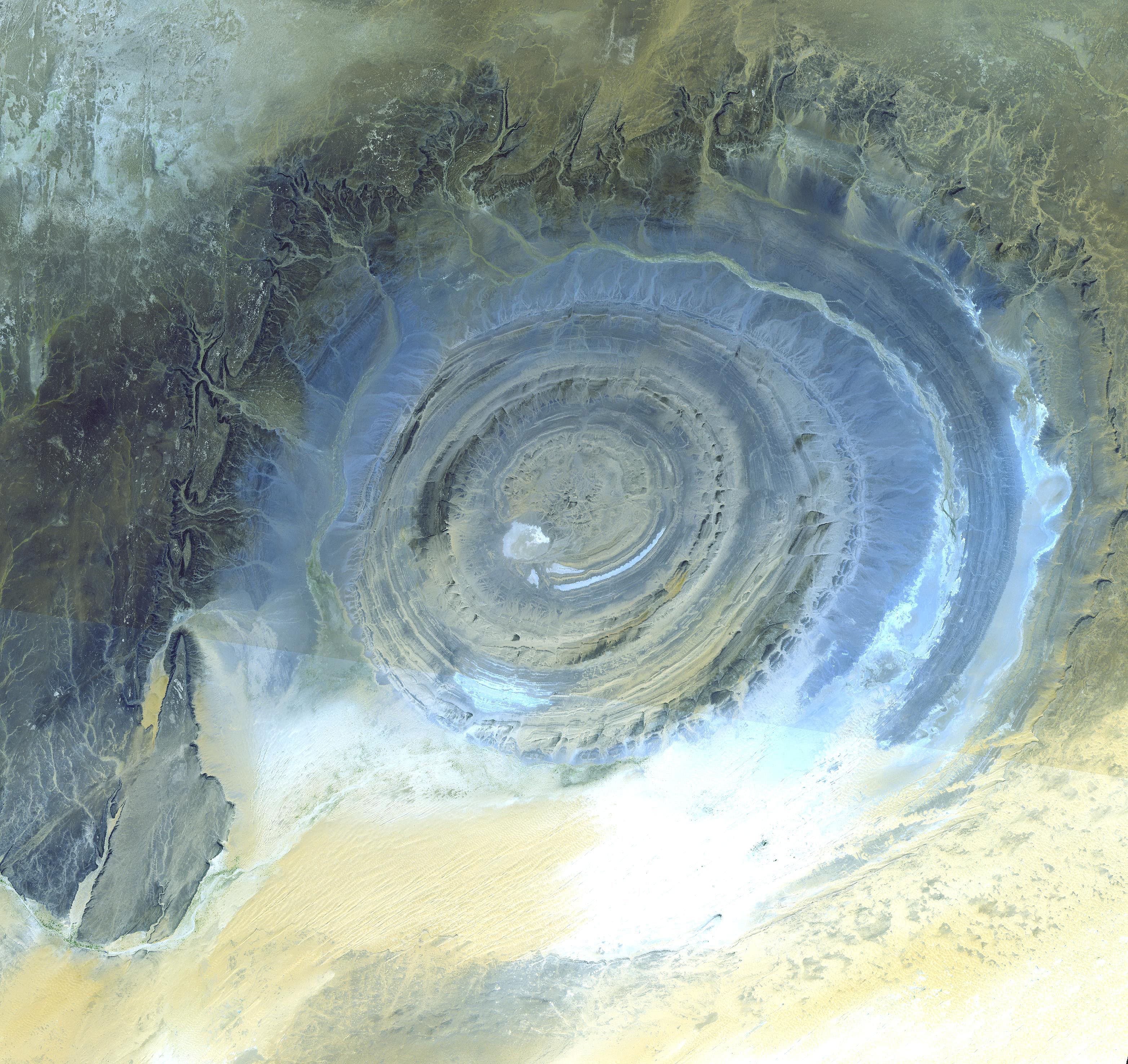
Banc d'Arguin National Park
TYPE
National Park
LOCATION
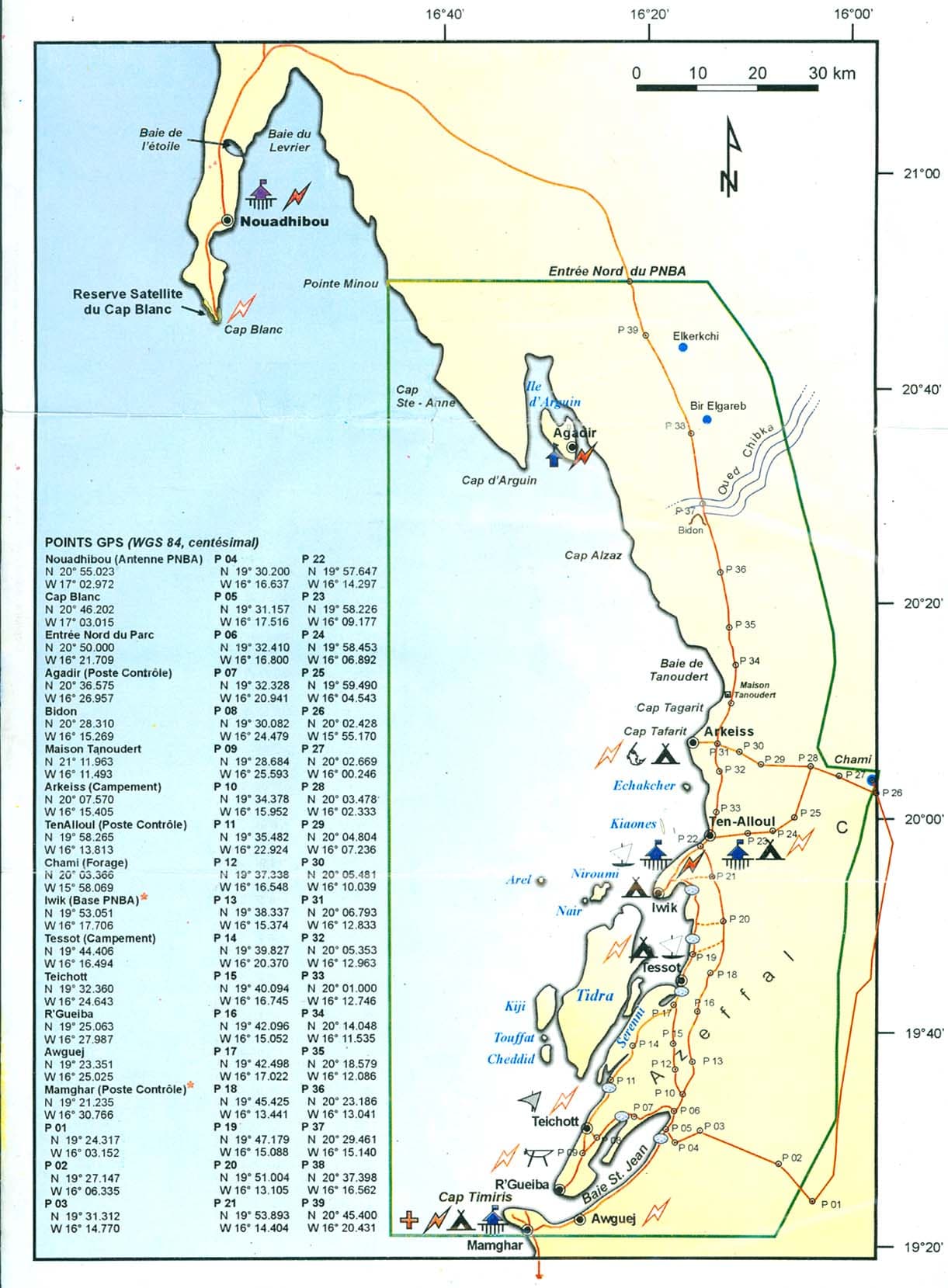
Western coast of Mauritania, between Nouakchott and Nouadhibou
TAGS
National Park, Wildlife, Birdwatching, Coastal, UNESCO, Nature
DESCRIPTION
A vast and ecologically significant national park located on the Atlantic coast of Mauritania. It is a major breeding site for millions of migratory birds from Europe, Siberia, and Greenland, including flamingos, pelicans, and terns. The park's unique ecosystem features a blend of desert landscapes, coastal dunes, and marine waters, supporting a rich biodiversity of fish, marine mammals like monk seals and dolphins, and various reptile species. It is also home to the Imraguen people, who practice traditional fishing methods in harmony with the environment. The park is a UNESCO World Heritage site, recognized for its outstanding universal value as a natural habitat and a critical stopover for avian migration.
Source: https://whc.unesco.org/en/list/162/
Confidence: 1
Update Cycle: 60 months
Résumé de la destination
mauritania
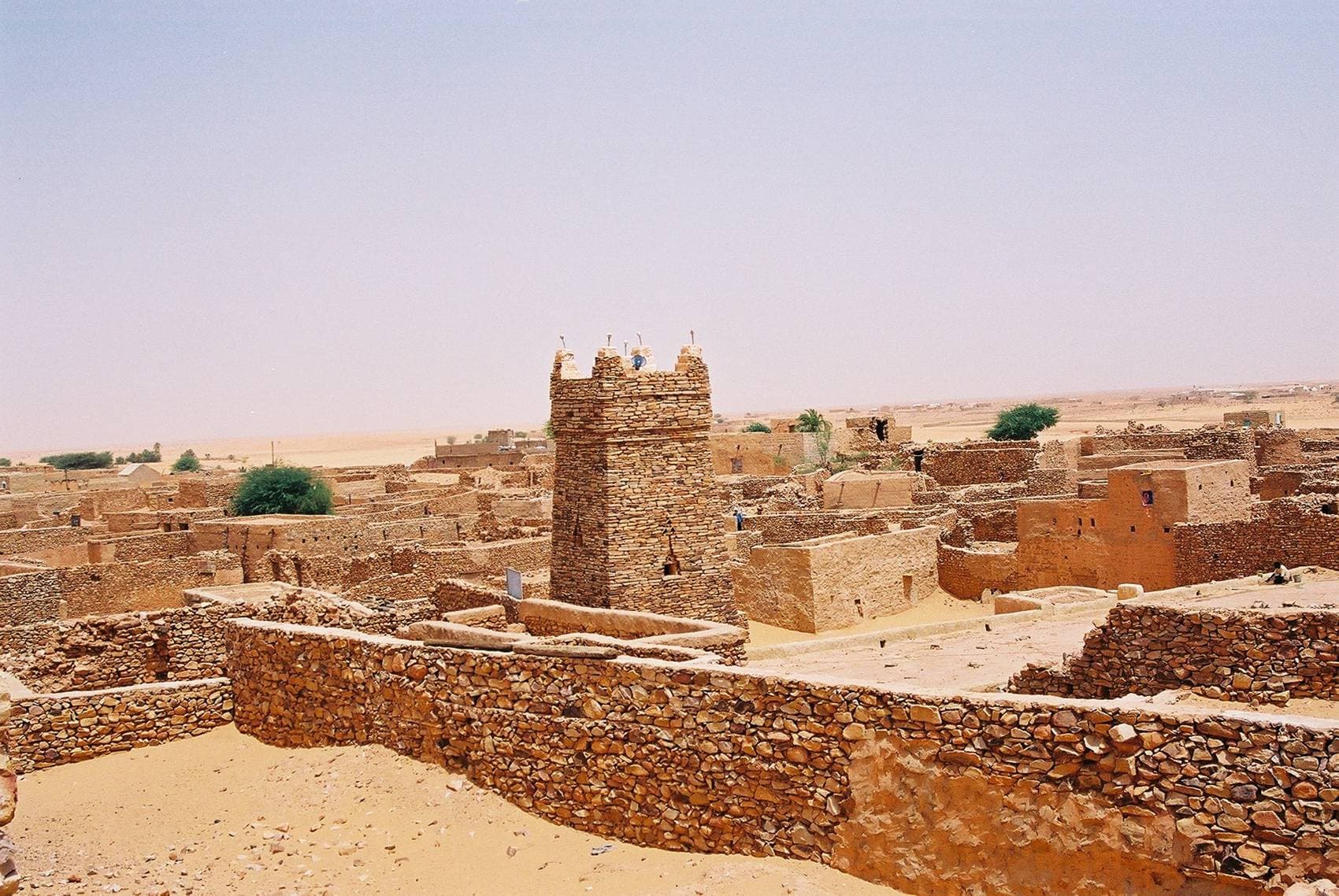
Mauritania offers intrepid travelers a journey through vast Sahara desert landscapes, ancient caravan cities like Chinguetti, and a rugged Atlantic coastline. It's a destination rich in nomadic culture and historical trade routes.
Catégorie
West Africa
Langues
Arabic, French
Règles Spéciales
Most nationalities require a visa, often obtainable on arrival at Nouakchott International Airport; always verify current requirements. Modest dress is advisable, especially for women, due to conservative Islamic customs. Right-hand traffic.
>
Durées de vol moyennes de l'Inde à la Mauritanie
Delhi (DEL)
Aéroport international Indira Gandhi
Nouakchott (NKC)
Aéroport international de Nouakchott–Oumtounsy
Durée
16 h 30 min
Type de vol
1 escale
Compagnies aériennes
Qatar Airways
Mumbai (BOM)
Aéroport international Chhatrapati Shivaji Maharaj
Nouakchott (NKC)
Aéroport international de Nouakchott–Oumtounsy
Durée
17 h 45 min
Type de vol
1 escale
Compagnies aériennes
Turkish Airlines
Bengaluru (BLR)
Aéroport international Kempegowda
Nouakchott (NKC)
Aéroport international de Nouakchott–Oumtounsy
Durée
18 h 30 min
Type de vol
1 escale
Compagnies aériennes
Ethiopian Airlines
Chennai (MAA)
Aéroport international de Chennai
Nouakchott (NKC)
Aéroport international de Nouakchott–Oumtounsy
Durée
28 h 15 min
Type de vol
2 escales
Compagnies aériennes
Emirates,
Royal Air Maroc
Calendrier des événements
Festival of Ancient Cities (Festival des Villes Anciennes)
This is Mauritania's premier cultural festival, designed to celebrate and preserve the rich heritage of its ancient desert cities. The festival brings these historic towns to life with a vibrant program of traditional music, dance, poetry recitations, camel races, and artisan markets. It serves as a platform for cultural exchange, showcasing traditional crafts, promoting local tourism, and fostering a sense of national pride in Mauritania's deep historical roots and intellectual legacy, drawing visitors from across the country and beyond.
Source: http://www.culture.gov.mr/
Confiance: 0.95
Cycle de Mise à Jour: 12 months

Mauritania Independence Day
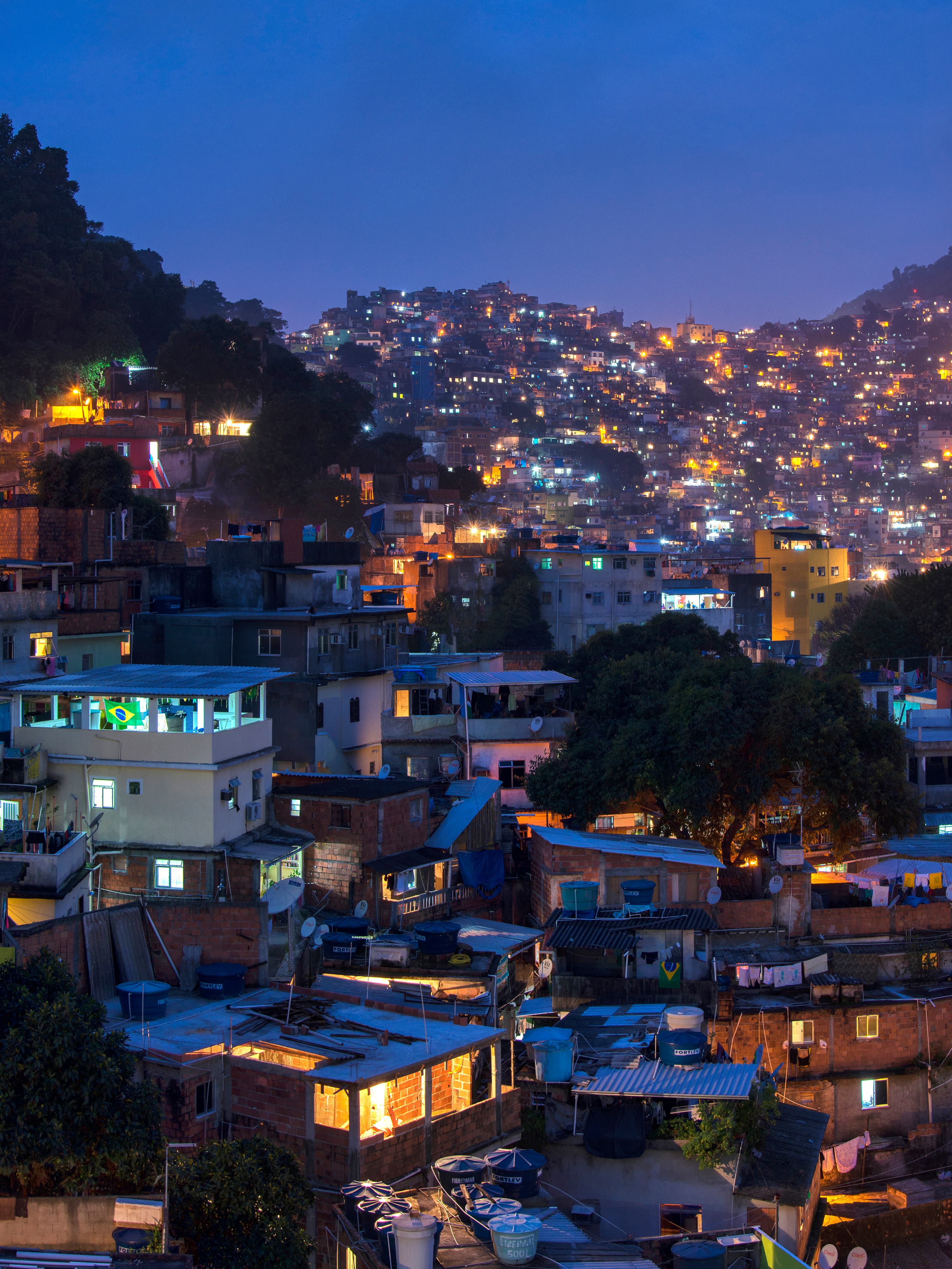
Mauritania's Independence Day commemorates the country's liberation from French colonial rule on November 28, 1960. It is a significant national holiday marked by official ceremonies, military parades, and cultural performances in the capital, Nouakchott. Across the nation, communities celebrate with patriotic displays, traditional music, dance, and family gatherings, reflecting a strong sense of national identity and pride in Mauritania's sovereignty and historical journey.
Source: http://www.mauritania.mr/
Confiance: 1
Cycle de Mise à Jour: 12 months


Eid al-Fitr
Eid al-Fitr marks the end of Ramadan, the Islamic holy month of fasting, and is one of the most important religious holidays in Mauritania. It is a joyous occasion characterized by communal prayers, charitable giving (Zakat al-Fitr), family gatherings, and festive meals. People dress in new clothes, exchange gifts, and visit relatives and friends, fostering a strong sense of community and spiritual renewal after a month of devotion and reflection.
Source: http://www.islam.gov.mr/
Confiance: 0.98
Cycle de Mise à Jour: 12 months


Eid al-Adha
Eid al-Adha, the "Feast of Sacrifice," is the second major Islamic holiday, commemorating Prophet Ibrahim's (Abraham's) willingness to sacrifice his son. In Mauritania, it is observed with great devotion, beginning with communal prayers, followed by the ritual sacrifice of an animal (usually a sheep or goat), a portion of which is distributed to the poor. It is a time for family reunions, feasting, and reflecting on themes of sacrifice, faith, and charity, reinforcing community bonds and spiritual commitment.
Source: http://www.islam.gov.mr/
Confiance: 0.98
Cycle de Mise à Jour: 12 months

Pourquoi les clients aiment Prune ?
Internet instantané à l'atterrissage
Connectez-vous dès que votre avion touche le sol. Pas d'attente, pas de tracas.
Économisez 80 % par rapport à l'itinérance
Gardez votre budget de voyage intact avec des tarifs qui écrasent les frais d'itinérance traditionnels.
Conservez l'accès à WhatsApp et aux OTP
Restez joignable pour les messages, les vérifications et les codes à deux facteurs où que vous soyez.
Fonctionne dans plusieurs régions
Une eSIM couvre plusieurs pays pour que vous voyagiez sans changer de carte.
Configuration en 2 minutes
Scannez, activez et partez. C'est aussi simple que ça — aucune visite en magasin nécessaire.
Assistance 24h/24 et 7j/7
De vraies personnes prêtes à vous aider à tout moment, n'importe où dans le monde.