Traveling Abroad?
Traveling from colombia? Find the Best eSIM for Your Next Destination
Choose from 200+ countries and save up to 90% on roaming
Trusted by Millions of Travelers
Instant Activation
Save up to 90% on roaming
Leading Network Partners
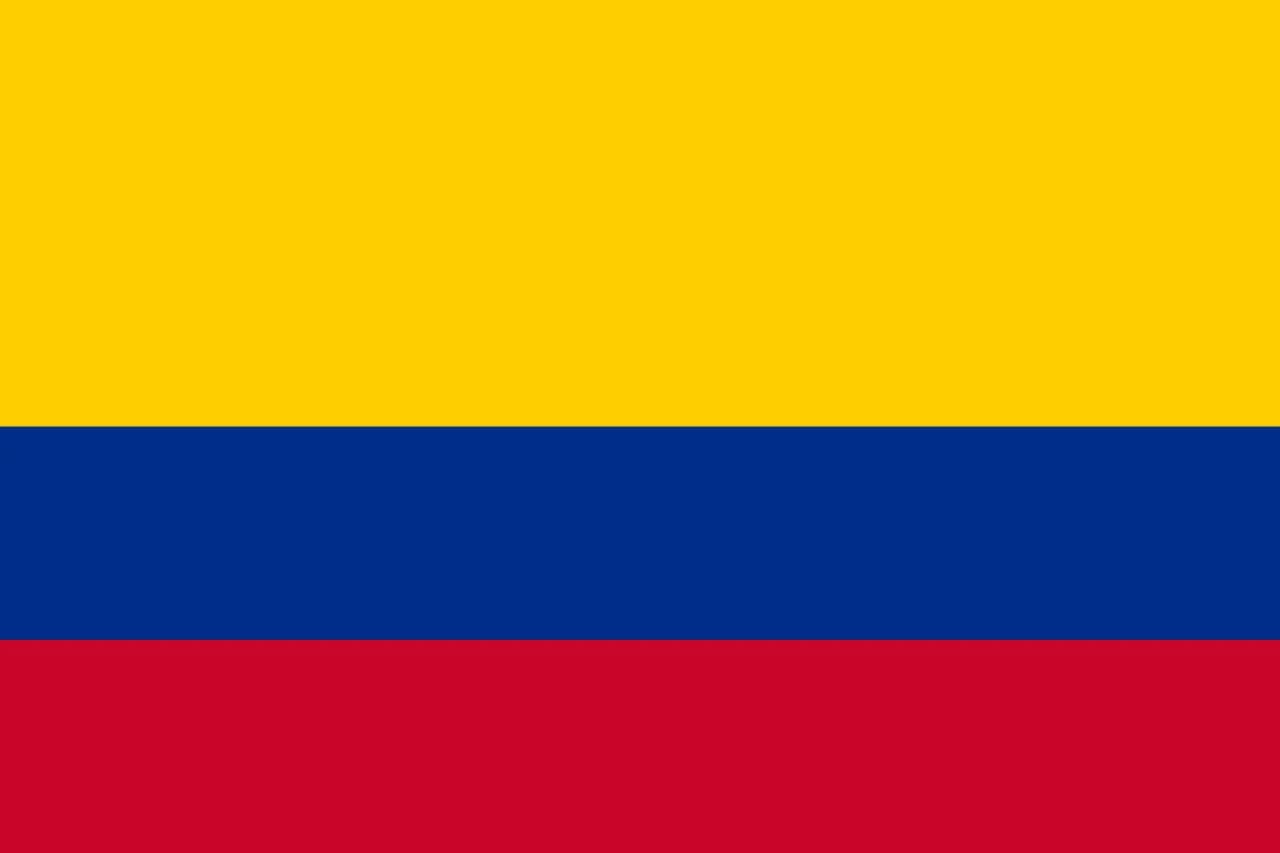
Colombia eSIM

Claro 4G
+1 others
If you're running low, you can always Top up
The package starts when you connect to a supported network

Data
Choose your package
7 Days
1 GB
$3.29 USD
15 Days
2 GB
$4.38 USD
30 Days
3 GB
$5.48 USD
5 GB
$28.56 USD
Essential Facts for Visiting colombia
Bon bagay, my friend! As a citizen of Guadeloupe, you hold a French passport, which means you're in luck. Fòk ou sav, you do not need a visa to enter Colombia for tourism purposes for stays up to 90 days. This makes planning your trip to the land of coffee and cumbia much simpler, pa ni pwoblèm.
Should you wish to extend your stay beyond the initial 90 days, you can apply for an extension for another 90 days, allowing for a maximum of 180 days within a calendar year. Just remember, this is for tourism; other purposes might require a different approach. Always check the latest regulations before you travel, an ti bwen of preparation goes a long way.
Source: fly2globe
Confidence: 1
Update cycle: As needed
When you're getting ready for your 'voyage' to Colombia, make sure your passport is in order. The official requirement is that your passport must be valid for the entire period of your intended stay. So, if you plan to be there for 60 days, it needs to be valid for at least those 60 days.
However, fè atansyon, many airlines and immigration officials often recommend or prefer a passport that is valid for at least six months beyond your planned entry date. While not strictly mandated by Colombia for all cases, it's a 'bon bagay' practice to avoid any potential hiccups at the border. Better safe than sorry, as they say!
Source: amazon
Confidence: 0.95
Update cycle: Regularly reviewed

If your journey involves just a quick stopover in Colombia, perhaps to catch another flight, you'll be pleased to know that for most airside transits, a visa is generally not required. This means if you're staying within the international transit area of the airport and have a confirmed onward ticket, you can usually pass through without extra paperwork.
Fòk ou sav, if your transit requires you to leave the airport's international zone, even for a short while, or if your layover is extended, then the standard entry requirements for tourists will apply. Since you're visa-exempt for short stays, this typically won't be an issue, but always confirm your specific itinerary with your airline and the Colombian authorities, just to be sure.
Source: tpt
Confidence: 0.95
Update cycle: As needed
For travelers from Guadeloupe, there is currently no specific electronic travel authorization (like an ESTA or eTA) required to enter Colombia. Your valid French passport is your primary document for entry, assuming you meet the general immigration criteria for tourists.
This means you won't need to apply for any special online permit before your trip, which is 'bon bagay' for a smoother planning process. Just ensure you have your passport, return ticket, and proof of sufficient funds for your stay, as these are standard requirements for most international travel.
Source: istock
Confidence: 1
Update cycle: As needed

Since citizens of Guadeloupe (holding French passports) are exempt from visa requirements for short tourist stays in Colombia, there is no specific eVisa link for you to apply through. You can simply arrive with your valid passport and meet the standard entry conditions.
However, if you were a citizen of a country that *does* require a visa, or if your purpose of travel was other than tourism, you would typically find information and application portals on the official website of the Colombian Ministry of Foreign Affairs (Cancillería de Colombia). For general visa information, that's the place to check, 'sé sa'.
Source: trading-view
Confidence: 1
Update cycle: As needed
Health & Safety Tips for colombia
Colombia operates a unified emergency response system, with 123 serving as the primary national emergency number for police, ambulance, and fire services. This centralized number simplifies reporting incidents and ensures coordinated assistance across major cities and regions, making it the most critical contact for any immediate crisis.
While 123 is the main contact, direct numbers like 112 for police, 125 for ambulance, and 119 for fire departments are also functional in some areas, though less commonly publicized for tourists. For non-urgent matters or specific tourist-related concerns, some cities may have a dedicated tourist police line, but immediate emergencies should always default to 123.
It is highly advisable for international visitors to save 123 in their phone contacts upon arrival. In any emergency, clearly state your location, the nature of the emergency, and your contact information. If possible, have a local or Spanish-speaking individual assist with the call, as English support may be limited.
Source: U.S. Embassy in Colombia / Colombian National Police
Confidence: 0.95
Update cycle: Annually
Travelers to Colombia should be aware of several health concerns, particularly mosquito-borne diseases like Dengue, Chikungunya, and Zika, which are prevalent in areas below 2,000 meters (6,500 feet). Consistent use of insect repellent, wearing long sleeves and pants, and sleeping under mosquito nets or in air-conditioned rooms are crucial preventative measures in these regions.
Altitude sickness (soroche) is a common issue in high-altitude cities such as Bogotá (2,640 meters / 8,660 feet) and Medellín. Visitors should allow time for acclimatization, stay hydrated, avoid excessive alcohol and strenuous activity upon arrival, and consult a doctor if symptoms worsen. Food and water safety also requires attention; while tap water is generally safe in major cities, bottled water is often recommended for sensitive stomachs or in rural areas, and caution should be exercised with street food.
General safety precautions are also vital for health and well-being. Petty crime, including pickpocketing and bag snatching, occurs in tourist areas; travelers should remain vigilant, avoid displaying valuables, and use secure transport options. It's also important to be cautious about accepting food or drinks from strangers due to isolated incidents of scopolamine (burundanga) use, which can lead to incapacitation.

Source: Centers for Disease Control and Prevention (CDC) / World Health Organization (WHO)
Confidence: 0.9
Update cycle: Quarterly
A Yellow Fever vaccination is generally required for travelers arriving from or transiting through countries with a risk of Yellow Fever transmission. Furthermore, it is strongly recommended, and often mandatory, for anyone planning to visit specific high-risk areas within Colombia, including certain national parks (e.g., Tayrona, Sierra Nevada de Santa Marta), the Amazon region, and other jungle or rural areas.
Travelers should carry their International Certificate of Vaccination or Prophylaxis (ICVP) as proof of Yellow Fever vaccination, which must be administered at least 10 days before travel to be effective. Without this, entry to certain high-risk areas or even into Colombia from specific countries might be denied, so checking the latest requirements before travel is essential.
Beyond Yellow Fever, it is crucial to ensure all routine vaccinations (e.g., MMR, DTaP, Polio) are up to date. Additionally, vaccines for Hepatitis A and Typhoid are highly recommended for most visitors due to potential exposure through contaminated food or water, while Hepatitis B, Rabies, and Japanese Encephalitis may be advised depending on the traveler's specific itinerary, activities, and duration of stay, and a consultation with a travel health specialist is advised.

Source: Centers for Disease Control and Prevention (CDC) / Colombian Ministry of Health
Confidence: 0.9
Update cycle: Annually
Connectivity & Mobility in colombia
Extensive Network Coverage Across Colombia
Colombia boasts extensive mobile network coverage, with major carriers like Claro, Movistar, and Tigo providing reliable service across urban centers and increasingly into rural areas. Tourists can expect strong 4G/LTE connectivity in most populated regions, ensuring seamless communication and internet access. Both physical SIM cards and eSIMs utilize these robust networks, offering visitors flexibility. While physical SIMs are widely available upon arrival, eSIMs provide the convenience of activating a plan before travel, leveraging the same underlying network infrastructure for consistent performance.
Source: Claro Colombia Cobertura: https://www.claro.com.co/cobertura/
Confidence: 0.95
Update Cycle: 3-6 months

Affordable Prepaid SIM Options
For tourists, prepaid SIM cards in Colombia offer a cost-effective way to stay connected. A typical tourist-oriented SIM plan, including a reasonable amount of data (e.g., 5-10 GB) and local calls, generally ranges from COP 20,000 to COP 50,000 for a validity period of 7 to 30 days, depending on the carrier and package specifics. These plans are easily purchasable at airports, official carrier stores, and various retail outlets nationwide. For those preferring digital convenience, https://prune.co.in/ often has competitive pricing for eSIM plans.
Source: Claro Colombia Prepago: https://www.claro.com.co/personas/servicios/movil/prepago/
Confidence: 0.9
Update Cycle: 3-6 months

Strong 5G & 4G in Urban Centers
Mobile network coverage within Colombia's major metropolitan areas is exceptionally strong, offering reliable 4G/LTE connectivity throughout cities and their transit systems. Visitors can expect robust internet speeds and consistent service in urban hubs like Bogotá and Medellín, which are well-equipped with modern infrastructure. Furthermore, 5G networks are actively being deployed and are available in several key cities, including Bogotá, Medellín, Cali, and Barranquilla, providing even faster speeds and enhanced capacity for compatible devices. This ensures tourists have excellent connectivity for navigation, communication, and streaming while exploring these vibrant cities.
Source: Claro Colombia 5G: https://www.claro.com.co/personas/5g/
Confidence: 0.95
Update Cycle: 3-6 months

Money & Daily Life in colombia
Currency
The official currency of Colombia is the Colombian Peso (COP), commonly denoted by the symbol '$' or 'COL$'. Banknotes are available in denominations of $1,000, $2,000, $5,000, $10,000, $20,000, $50,000, and $100,000, while coins come in $50, $100, $200, $500, and $1,000. It's advisable to carry smaller denominations for street vendors, small shops, and taxi fares.
Source: Banco de la República (Central Bank of Colombia)
Confidence: 1
Update Cycle: N/A

Tipping culture
Tipping culture in Colombia is somewhat nuanced. In many restaurants, especially in larger cities, a 10% service charge (propina) is often automatically added to the bill; you have the right to decline it if the service was unsatisfactory, but it's generally expected for good service. For taxis, tipping is not customary, but rounding up the fare to the nearest convenient amount is common. For hotel staff like porters or housekeepers, a small tip of COP 2,000-5,000 is appreciated. Tour guides generally expect a tip for good service, typically 10-15% of the tour cost or a set amount like COP 10,000-20,000 per person for a half-day tour.
Source: Lonely Planet / Various Travel Guides
Confidence: 0.85
Update Cycle: Biennially

Credit cards
Credit cards, primarily Visa and MasterCard, are widely accepted in major cities, large hotels, supermarkets, and upscale restaurants throughout Colombia. However, American Express and Discover cards are less frequently accepted. It's important to note that many smaller towns, local markets, and independent businesses operate on a cash-only basis, making it advisable to always carry some Colombian Pesos. ATMs are readily available in urban centers and larger towns; inform your bank of your travel plans to avoid card blocks, and exercise caution when using ATMs, preferably choosing those located inside banks or shopping centers during daylight hours.
Source: U.S. Department of State / Major Credit Card Networks
Confidence: 0.9
Update Cycle: Annually

Plug/Voltage
In Colombia, the standard voltage is 110V-120V, and the frequency is 60Hz. The electrical outlets are compatible with plug types A and B, which are the same as those used in the United States and Canada. Travelers from countries with different voltage standards (e.g., Europe, Australia, most of Asia) will require a voltage converter for appliances not dual-voltage, in addition to a plug adapter if their devices do not use Type A or B plugs.
Source: WorldStandards.eu
Confidence: 1
Update Cycle: N/A

Local language(s)
The official language of Colombia is Spanish, spoken by the vast majority of the population. While Spanish is dominant, the country is also home to numerous indigenous languages spoken by various ethnic groups, particularly in more remote regions. English is spoken in some tourist-centric areas, major international hotels, and by a segment of the younger, educated population in larger cities, but it is not widely understood across the country. Learning basic Spanish phrases is highly recommended for navigating daily life, interacting with locals, and enhancing the overall travel experience.
Source: Colombian Ministry of Culture / Ethnologue
Confidence: 1
Update Cycle: N/A

Weather and Seasonal Guide for colombia

Best time to visit
December to March and July to August
Colombia experiences two main dry seasons, offering sunny days and lower humidity, making them ideal for exploring the country's diverse landscapes. While these periods are popular, particularly December-January, they provide the most reliable weather for visiting beaches, mountains, and cities across various regions.
Avg temp(april)
22°C
Marks the beginning of the first rainy season, bringing increased rainfall, especially in the Andean regions. While the overall average remains around 22°C, expect cooler temperatures in the highlands and afternoon showers.
Source: ProColombia
Confidence: 0.9
Update Cycle: Every 12 months
Destination Summary
colombia
Colombia offers a breathtaking mosaic of Caribbean beaches, Andean peaks, Amazonian rainforests, and vibrant cities, all infused with rich culture, world-class coffee, and warm hospitality.
CATEGORY
South America
LANGUAGES
Spanish
SPECIAL RULES
Many nationalities (e.g., US, EU, UK) can enter visa-free for up to 90 days; others may require a visa. Right-hand traffic applies. Always check current entry requirements before travel.
>
Average Flight Times from guadeloupe to colombia
Pointe-à-Pitre (PTP)
Pointe-à-Pitre International Airport
Bogotá (BOG)
El Dorado International Airport
Duration
8 hr 30 min
Flight Type
1 Stop
Airlines
Silver Airways,
Avianca
Pointe-à-Pitre (PTP)
Pointe-à-Pitre International Airport
Medellín (MDE)
José María Córdova International Airport
Duration
9 hr 0 min
Flight Type
1 Stop
Airlines
Silver Airways,
Avianca
Pointe-à-Pitre (PTP)
Pointe-à-Pitre International Airport
Cartagena (CTG)
Rafael Núñez International Airport
Duration
8 hr 45 min
Flight Type
1 Stop
Airlines
Silver Airways,
Avianca
Pointe-à-Pitre (PTP)
Pointe-à-Pitre International Airport
Cali (CLO)
Alfonso Bonilla Aragón International Airport
Duration
9 hr 30 min
Flight Type
1 Stop
Airlines
Silver Airways,
Avianca
Why Customers Love Prune?
Instant internet on landing
Get connected the moment your plane touches down. No waiting, no hassle.
Save 80% vs roaming
Keep your travel budget intact with rates that crush traditional roaming fees.
Keep WhatsApp & OTP access
Stay reachable for messages, verifications, and two-factor codes wherever you are.
Works across regions
One eSIM covers multiple countries so you travel without swapping cards.
Setup in 2 minutes
Scan, activate, and go. It's that simple — no store visits needed.
24/7 support
Real humans ready to help you anytime, anywhere in the world.