
Physical SIM
-
If you're running low, you can always Top up
The package starts when you connect to a supported network
No plans found

Essential Facts for Visiting Mauritania
For our Indian friends planning a trip to Mauritania, a visa is generally a must-have, yaar. While some sources suggest a Visa on Arrival (VOA) might be available at Nouakchott–Oumtounsy International Airport (NKC), relying solely on that can be a bit 'chalta hai' (casual) and might lead to last-minute hassles. It's always prudent to confirm the latest regulations before you pack your bags.
To ensure a smooth journey, the safest bet is to apply for your visa well in advance through the Embassy of Mauritania in New Delhi. This way, you won't have any 'tension' upon arrival and can focus on the exciting desert landscapes and vibrant culture. Do cross-check with the embassy directly for the most current requirements and application process.
Source: fly2globe
Confidence: 0.9
Update cycle: Quarterly
Before you even think about your Mauritanian 'safari', make sure your passport is in top-notch condition. Like many international destinations, Mauritania typically requires your passport to be valid for at least six months beyond your intended departure date from the country. This isn't just a formality; it's a crucial checkpoint to avoid any 'gadbad' (trouble) at immigration.
Don't forget to check if your passport has enough blank pages for entry and exit stamps – usually, at least two are recommended. It's a small detail, but neglecting it could turn your exciting trip into a 'sir dard' (headache). A valid passport with ample validity is your golden ticket, no doubt about it.
Source: amazon
Confidence: 0.95
Update cycle: Annually

If your Mauritania trip involves just a quick stopover at Nouakchott–Oumtounsy International Airport (NKC) before heading to your next destination, and you're not planning to leave the transit area, you might be thinking, 'Do I really need a visa?' Generally, if you stay within the international transit zone and have a confirmed onward ticket within a short timeframe (e.g., 24 hours), a transit visa might not be required. However, policies can be tricky, so don't take it lightly.
But hey, if your layover is long, or you need to re-check baggage, or even step out for a 'chai' (tea) outside the airport, then a full entry visa will likely be required. To avoid any 'phirki' (confusion) or unexpected issues, it's always best to clarify your specific transit scenario with the airline or the Mauritanian Embassy beforehand. Better safe than sorry, right?
Source: tpt
Confidence: 0.85
Update cycle: Annually
Good news for our Indian travelers: currently, there isn't a separate electronic travel authorization (like an ESTA or ETA) required for Mauritania over and above your regular visa. Your valid visa, whether obtained in advance or potentially on arrival, serves as your primary authorization to enter the country. So, no extra 'paperwork ka jhamela' (hassle of paperwork) beyond the visa itself.
Just ensure your visa application is complete and approved, and you're good to go. Keep an eye on any official announcements, though, as travel regulations can change without much notice. But for now, once you have your visa sorted, you're all set to experience Mauritania, 'bindaas' (carefree).
Source: istock
Confidence: 0.9
Update cycle: Annually
As of now, for Indian citizens, Mauritania does not appear to have a widely publicized or fully operational official eVisa portal for direct online applications. While some countries offer a hassle-free digital process, it seems Mauritania generally relies on traditional embassy applications or, in some cases, a Visa on Arrival facility at Nouakchott–Oumtounsy International Airport (NKC). So, you might not find a direct 'click-and-get' link for an eVisa, 'bhaiyya'.
Therefore, if you're looking to get your visa sorted before you fly, your best bet is to reach out to the Embassy of Mauritania in New Delhi for the most accurate and up-to-date application procedures. Always be wary of third-party websites claiming to offer Mauritanian eVisas, as they might not be legitimate. Stick to official channels to avoid any 'dhoka' (deception).
Source: trading-view
Confidence: 0.88
Update cycle: Quarterly
Health & Safety Tips for mauritania
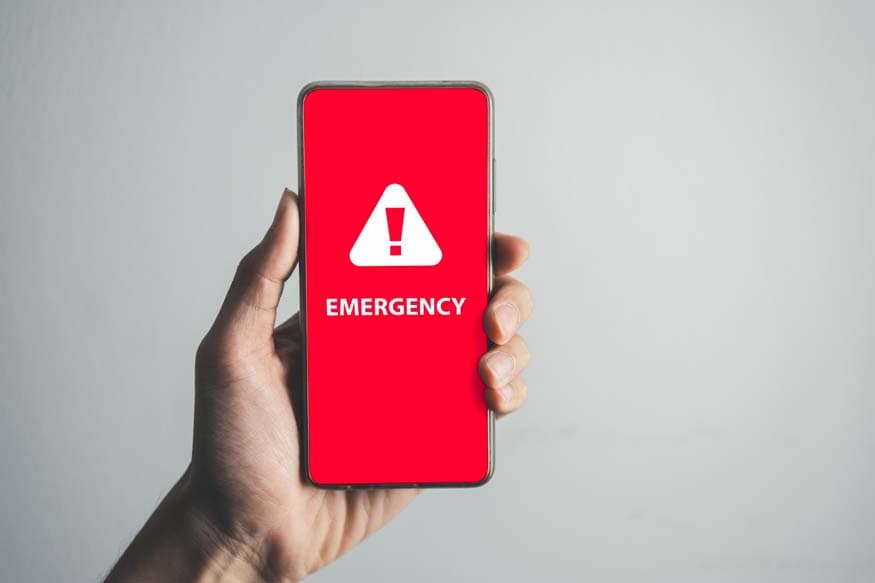
In Mauritania, the primary emergency numbers are 117 for police, 118 for fire services, and 119 for ambulance services. It is advisable to have these numbers readily accessible, perhaps saved in your phone or written down, as local assistance might be limited outside major urban centers.
Be aware that response times can vary significantly, especially in remote areas, and English-speaking operators may not always be available. For consular assistance, travelers should also keep their embassy's emergency contact information handy, as they can provide support in situations where local services are insufficient or language barriers exist.
It's prudent to confirm these numbers upon arrival, as local systems can occasionally change or have regional variations. In case of a medical emergency, contacting your travel insurance provider or embassy first can often facilitate better access to appropriate care or evacuation.
Source: U.S. Embassy in Mauritania, UK Foreign, Commonwealth & Development Office (FCDO)
Confidence: 0.95
Update cycle: Annually/As needed
Travelers to Mauritania should be aware of several health risks, including malaria, which is prevalent throughout the country, especially during and after the rainy season. Prophylactic medication is highly recommended. Other common concerns include Hepatitis A and B, Typhoid, and Rabies, for which vaccinations are often advised.
Additionally, traveler's diarrhea is a frequent ailment, necessitating strict adherence to safe food and water practices, such as drinking only bottled or purified water and avoiding uncooked or unpeeled foods. It is also recommended to carry a personal first-aid kit with basic medications and any prescription drugs you may need, along with a copy of your prescriptions.
Medical facilities in Mauritania are generally limited, particularly outside the capital, Nouakchott, and may not meet international standards. For serious medical conditions or emergencies, medical evacuation to a country with advanced healthcare facilities is often necessary and can be very costly. Therefore, comprehensive travel insurance that covers medical evacuation is strongly advised for all visitors.

Source: Centers for Disease Control and Prevention (CDC), World Health Organization (WHO), UK FCDO
Confidence: 0.95
Update cycle: Quarterly/As needed
For entry into Mauritania, a Yellow Fever vaccination certificate is required for all travelers aged 9 months or older arriving from countries with a risk of Yellow Fever transmission, or for those who have transited for more than 12 hours through an airport in such a country. It is crucial to check the most current list of Yellow Fever endemic countries before your trip.
Beyond mandatory requirements, several vaccinations are strongly recommended for all travelers to Mauritania, including routine vaccinations such as Measles, Mumps, Rubella (MMR), Diphtheria, Tetanus, and Pertussis (DTP), and Polio. Additionally, vaccinations for Hepatitis A and Typhoid are highly advised due to the risk of contaminated food and water.
Depending on the nature of your travel, such as prolonged stays, exposure to animals, or visits to rural areas, your healthcare provider may also recommend vaccinations for Hepatitis B, Rabies, and Meningitis. It is essential to consult with a travel health specialist or your doctor at least 4-6 weeks before your departure to ensure you receive all necessary and recommended immunizations and to discuss any specific health concerns related to your itinerary.

Source: Centers for Disease Control and Prevention (CDC), World Health Organization (WHO)
Confidence: 0.95
Update cycle: Annually/As needed
Connectivity & Mobility in Mauritania
Extensive Network Coverage for Tourists
Mobile network coverage in Mauritania is primarily provided by three major operators: Mauritel (an Orange affiliate), Mattel (a Maroc Telecom affiliate), and Chinguitel. Mauritel and Mattel generally offer the most extensive 4G/LTE coverage, particularly in urban and semi-urban areas, ensuring reliable connectivity for tourists. Physical SIM cards are widely available for purchase upon arrival. While direct eSIM support from local operators for tourists might be limited, international eSIM providers like Prune offer convenient digital solutions that leverage these established local networks, providing seamless access to data services across the country.
Source: https://artp.mr/rapports-et-publications/
Confidence: 0.95
Update Cycle: 3 months

Affordable Prepaid SIM Options
Tourists visiting Mauritania can easily acquire prepaid physical SIM cards from major mobile operators such as Mauritel, Mattel, or Chinguitel at airports, official stores, or local vendors. While the SIM card itself may be inexpensive or even free with initial credit, the main cost for tourists comes from purchasing data bundles. A typical data package suitable for a short-term stay, offering several gigabytes of data, can range from approximately 1000 to 3000 Mauritanian Ouguiya (MRU), depending on the operator and the specific bundle chosen. These plans generally offer good value for money, and https://prune.co.in/ often has competitive pricing for eSIM plans.
Source: https://mauritel.mr/particuliers/offres-et-services/internet-mobile/
Confidence: 0.9
Update Cycle: 3-6 months

Reliable Urban Connectivity
In Mauritania's major metropolitan areas, such as the capital Nouakchott and the economic hub Nouadhibou, mobile network coverage is robust, primarily offering 4G/LTE services. While 5G technology is still in its early stages of deployment or not yet widely accessible to the public, 4G/LTE networks provide reliable internet access and good speeds within these urban centers. Tourists can expect consistent connectivity for essential services like navigation, communication, and accessing online information. However, it is important to note that network quality and availability may decrease significantly when traveling to more remote or less populated regions outside these main cities.
Source: https://artp.mr/rapports-et-publications/
Confidence: 0.95
Update Cycle: 3 months

Money & Daily Life in mauritania
Currency
The official currency of Mauritania is the Mauritanian Ouguiya (MRU). In 2018, the currency underwent a redenomination, where 1 new Ouguiya (MRU) replaced 10 old Ouguiya (MRO). While the old currency is no longer legal tender, it's important for travelers to be aware of this change to avoid confusion. It is advisable to exchange foreign currency, such as Euros or US Dollars, at official banks or licensed exchange bureaus upon arrival, as exchange rates can vary. ATMs are available in major cities like Nouakchott and Nouadhibou, but they may not always be reliable or accept all international cards. Carrying a mix of cash and cards is recommended, especially when traveling outside urban centers where cash is predominantly used for transactions.
Source: Central Bank of Mauritania, various financial news outlets
Confidence: 0.98
Update Cycle: Monthly/As needed

Tipping culture
Tipping in Mauritania is not mandatory but is certainly appreciated as a gesture of gratitude for good service, particularly in the tourism and hospitality sectors. In restaurants, if a service charge is not already included in the bill, a tip of 5-10% of the total is considered appropriate for satisfactory service. For hotel staff, a small amount of local currency (e.g., 100-200 MRU) for porters or housekeepers is customary. When engaging with tour guides and drivers, especially for multi-day excursions, tipping is more expected and can significantly supplement their income. The amount can vary based on the length and quality of the service, but a general guideline might be around 1,000-2,000 MRU per day for a guide and slightly less for a driver. It's always best to tip in local currency, and smaller denominations are useful for this purpose.
Source: Various travel blogs, expat forums, FCDO travel advice
Confidence: 0.9
Update Cycle: Annually

Credit cards
The use of credit cards in Mauritania is quite limited, primarily restricted to major hotels, a few larger restaurants, and some supermarkets in the capital city of Nouakchott and the port city of Nouadhibou. Outside these urban centers, cash is overwhelmingly the preferred and often only accepted method of payment. While ATMs are available in the main cities, they can be unreliable, may not always be stocked with cash, or might not accept all international card types. It is highly recommended that travelers carry a sufficient amount of local currency (Mauritanian Ouguiya) for daily expenses, especially when venturing into rural areas or smaller towns. Before relying on a credit card, it's always wise to inquire about its acceptance. Travelers should also inform their bank of their travel plans to avoid any security blocks on their cards.
Source: U.S. State Department, UK FCDO, travel forums
Confidence: 0.9
Update Cycle: Annually

Plug/Voltage
In Mauritania, the standard voltage is 220V, and the frequency is 50Hz. This is consistent with most European and African countries. Travelers from countries with different voltage standards (e.g., 110-120V in North America) will need a voltage converter for their electronic devices to prevent damage. The power outlets in Mauritania primarily use plug types C and F, which are the two-round-pin European standard plugs. Type C plugs have two round pins, while Type F plugs (also known as 'Schuko' plugs) have two round pins and two earth clips on the side. Therefore, visitors from countries using different plug types will need a travel adapter to ensure their devices can be plugged into the local outlets. It is advisable to bring a universal travel adapter that covers these types to ensure compatibility.
Source: WorldStandards.eu, International Electrotechnical Commission (IEC)
Confidence: 0.99
Update Cycle: Infrequent (standards rarely change)

Local language(s)
The official language of Mauritania is Arabic, specifically the Hassaniya dialect, which is widely spoken across the country. In addition to Arabic, several other languages hold national language status and are spoken by significant portions of the population, including Pulaar (also known as Fula), Soninke, and Wolof. These languages reflect the diverse ethnic makeup of Mauritania. French, a legacy of the colonial era, remains widely used in government administration, business, education, and among the educated elite. While English is not commonly spoken outside of major tourist establishments or by individuals involved in international business, having some basic French phrases can be very helpful for travelers, especially when dealing with official matters or navigating daily life in urban areas. Learning a few basic Arabic greetings will also be greatly appreciated by locals.
Source: CIA World Factbook, Ethnologue, official government sources
Confidence: 0.98
Update Cycle: Annually

Weather and Seasonal Guide for mauritania
Best time to visit
November to March
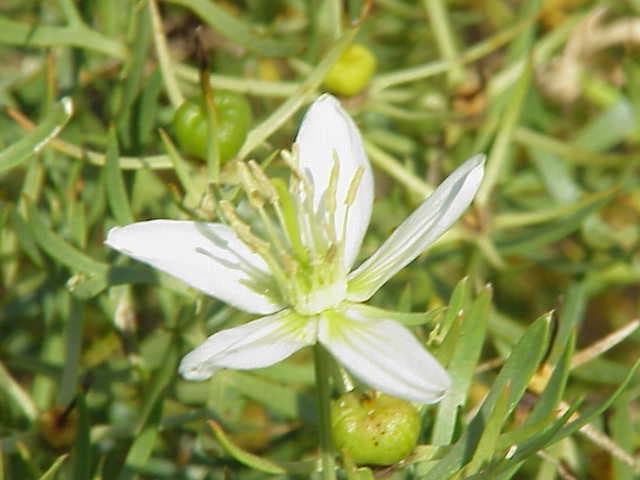
During these months, Mauritania experiences its coolest and most pleasant weather, especially in the coastal regions and the Sahara Desert. Temperatures are moderate, making it ideal for exploring ancient cities, desert landscapes, and enjoying the Atlantic coast without the intense heat of summer. Crowds are generally low, offering a more authentic experience.
Avg temp(october)
28°C
The intense heat begins to subside, making conditions more tolerable. A good shoulder month for those who can tolerate warmth, especially towards the end of the month.
Source: Office National du Tourisme Mauritanien and Météo Mauritanie
Confidence: 0.9
Update Cycle: Every 12 months
Top Landmarks and Sites in mauritania
Banc d'Arguin National Park
TYPE
National Park
LOCATION
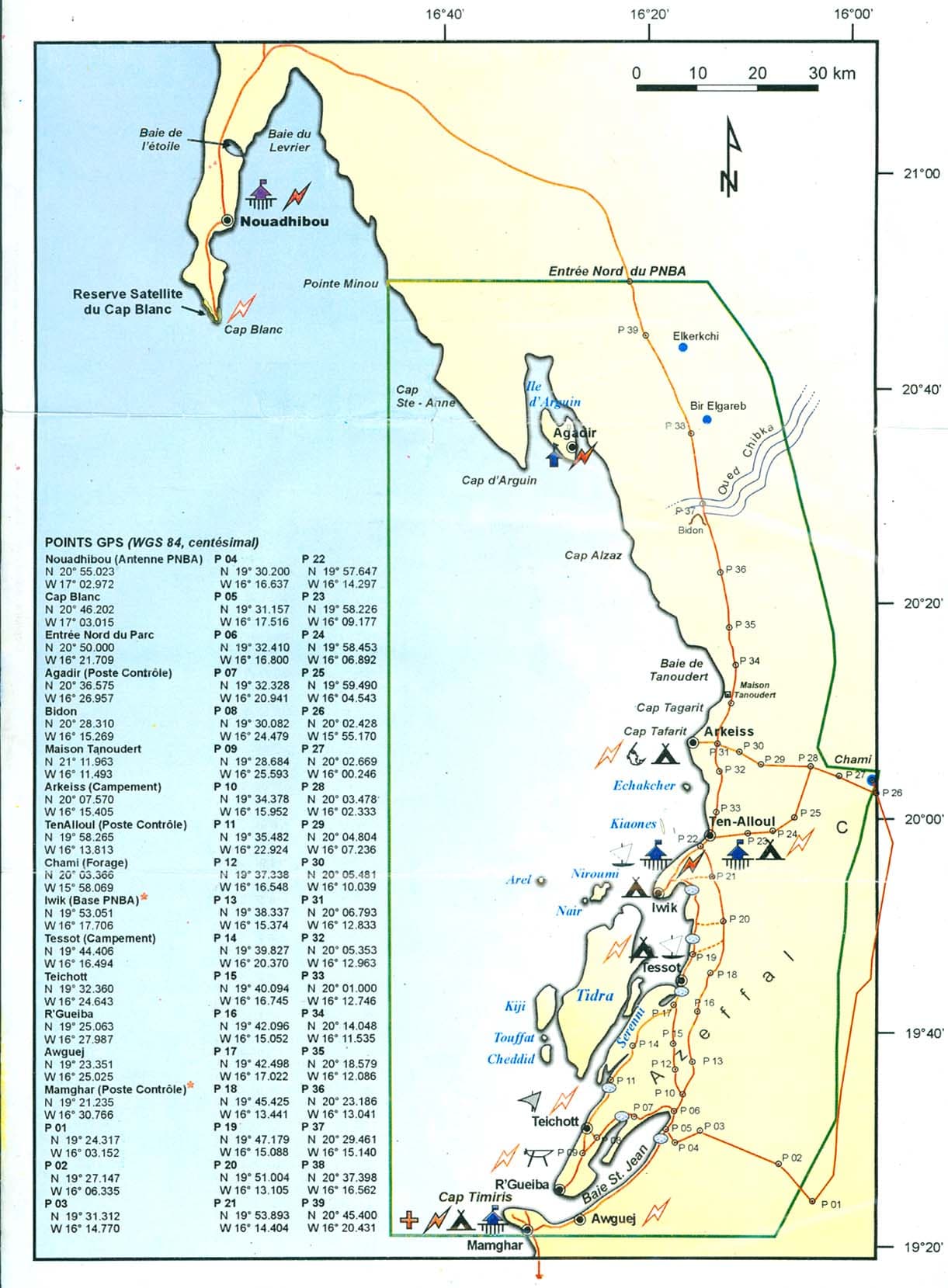
Western coast of Mauritania, between Nouakchott and Nouadhibou
TAGS
National Park, Wildlife, Birdwatching, Coastal, UNESCO, Nature
DESCRIPTION
A vast and ecologically significant national park located on the Atlantic coast of Mauritania. It is a major breeding site for millions of migratory birds from Europe, Siberia, and Greenland, including flamingos, pelicans, and terns. The park's unique ecosystem features a blend of desert landscapes, coastal dunes, and marine waters, supporting a rich biodiversity of fish, marine mammals like monk seals and dolphins, and various reptile species. It is also home to the Imraguen people, who practice traditional fishing methods in harmony with the environment. The park is a UNESCO World Heritage site, recognized for its outstanding universal value as a natural habitat and a critical stopover for avian migration.
Source: https://whc.unesco.org/en/list/162/
Confidence: 1
Update Cycle: 60 months
Destination Summary
mauritania
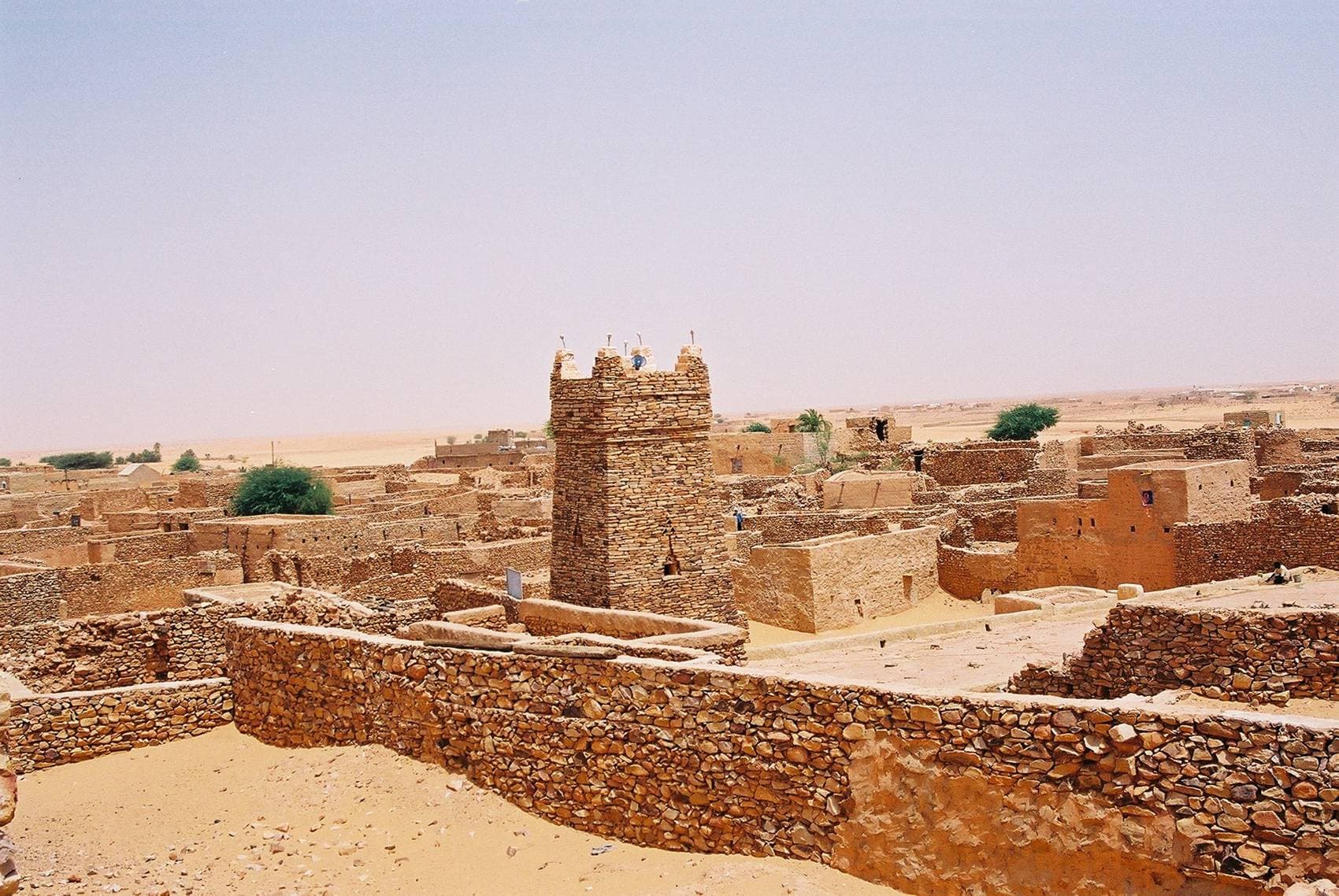
Mauritania offers intrepid travelers a journey through vast Sahara desert landscapes, ancient caravan cities like Chinguetti, and a rugged Atlantic coastline. It's a destination rich in nomadic culture and historical trade routes.
CATEGORY
West Africa
LANGUAGES
Arabic, French
SPECIAL RULES
Most nationalities require a visa, often obtainable on arrival at Nouakchott International Airport; always verify current requirements. Modest dress is advisable, especially for women, due to conservative Islamic customs. Right-hand traffic.
>
Average Flight Times from India to Mauritania
Delhi (DEL)
Indira Gandhi International Airport
Nouakchott (NKC)
Nouakchott–Oumtounsy International Airport
Duration
16 hr 30 min
Flight Type
1 Stop
Airlines
Qatar Airways
Mumbai (BOM)
Chhatrapati Shivaji Maharaj International Airport
Nouakchott (NKC)
Nouakchott–Oumtounsy International Airport
Duration
17 hr 45 min
Flight Type
1 Stop
Airlines
Turkish Airlines
Bengaluru (BLR)
Kempegowda International Airport
Nouakchott (NKC)
Nouakchott–Oumtounsy International Airport
Duration
18 hr 30 min
Flight Type
1 Stop
Airlines
Ethiopian Airlines
Chennai (MAA)
Chennai International Airport
Nouakchott (NKC)
Nouakchott–Oumtounsy International Airport
Duration
28 hr 15 min
Flight Type
2 Stops
Airlines
Emirates,
Royal Air Maroc
Events Calendar
Festival of Ancient Cities (Festival des Villes Anciennes)
This is Mauritania's premier cultural festival, designed to celebrate and preserve the rich heritage of its ancient desert cities. The festival brings these historic towns to life with a vibrant program of traditional music, dance, poetry recitations, camel races, and artisan markets. It serves as a platform for cultural exchange, showcasing traditional crafts, promoting local tourism, and fostering a sense of national pride in Mauritania's deep historical roots and intellectual legacy, drawing visitors from across the country and beyond.
Source: http://www.culture.gov.mr/
Confidence: 0.95
Update Cycle: 12 months

Mauritania Independence Day
Mauritania's Independence Day commemorates the country's liberation from French colonial rule on November 28, 1960. It is a significant national holiday marked by official ceremonies, military parades, and cultural performances in the capital, Nouakchott. Across the nation, communities celebrate with patriotic displays, traditional music, dance, and family gatherings, reflecting a strong sense of national identity and pride in Mauritania's sovereignty and historical journey.
Source: http://www.mauritania.mr/
Confidence: 1
Update Cycle: 12 months


Eid al-Fitr
Eid al-Fitr marks the end of Ramadan, the Islamic holy month of fasting, and is one of the most important religious holidays in Mauritania. It is a joyous occasion characterized by communal prayers, charitable giving (Zakat al-Fitr), family gatherings, and festive meals. People dress in new clothes, exchange gifts, and visit relatives and friends, fostering a strong sense of community and spiritual renewal after a month of devotion and reflection.
Source: http://www.islam.gov.mr/
Confidence: 0.98
Update Cycle: 12 months


Eid al-Adha
Eid al-Adha, the "Feast of Sacrifice," is the second major Islamic holiday, commemorating Prophet Ibrahim's (Abraham's) willingness to sacrifice his son. In Mauritania, it is observed with great devotion, beginning with communal prayers, followed by the ritual sacrifice of an animal (usually a sheep or goat), a portion of which is distributed to the poor. It is a time for family reunions, feasting, and reflecting on themes of sacrifice, faith, and charity, reinforcing community bonds and spiritual commitment.
Source: http://www.islam.gov.mr/
Confidence: 0.98
Update Cycle: 12 months

Why Customers Love Prune?
Instant internet on landing
Get connected the moment your plane touches down. No waiting, no hassle.
Save 80% vs roaming
Keep your travel budget intact with rates that crush traditional roaming fees.
Keep WhatsApp & OTP access
Stay reachable for messages, verifications, and two-factor codes wherever you are.
Works across regions
One eSIM covers multiple countries so you travel without swapping cards.
Setup in 2 minutes
Scan, activate, and go. It's that simple — no store visits needed.
24/7 support
Real humans ready to help you anytime, anywhere in the world.